
Reporterre | 12 août 2024 | Europe – Reportage
Alors que l’extrême droite menace de gagner plusieurs élections régionales allemandes, 1 400 activistes se sont réunis dans un camp climat à Erfurt pour faire le lien entre antifascisme et écologie. [English translation and photo gallery at the end]
Erfurt (Allemagne), reportage
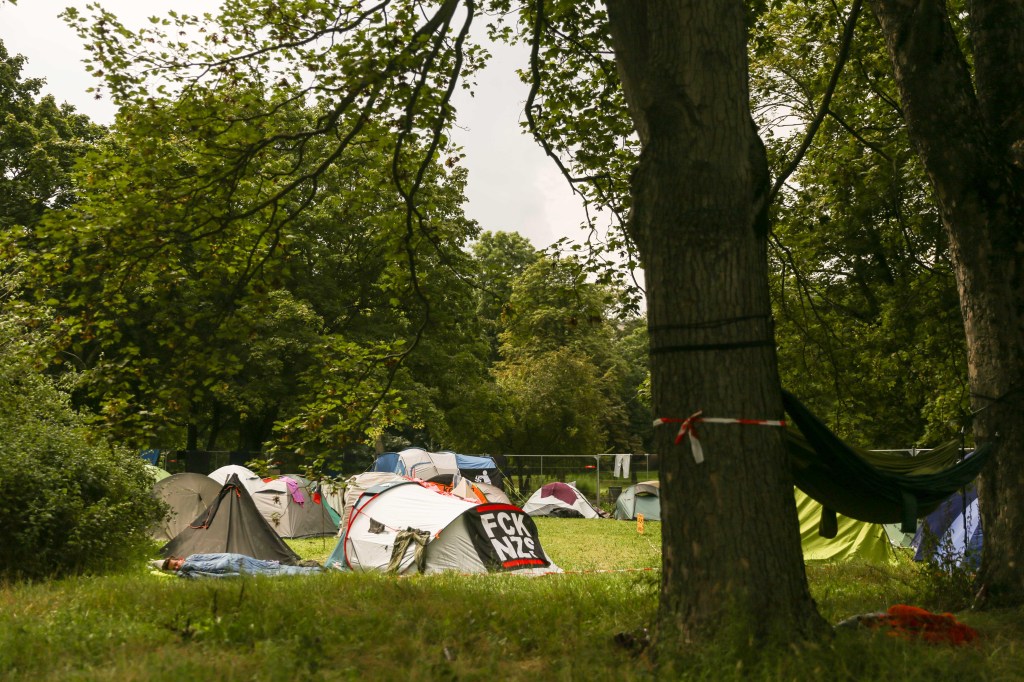
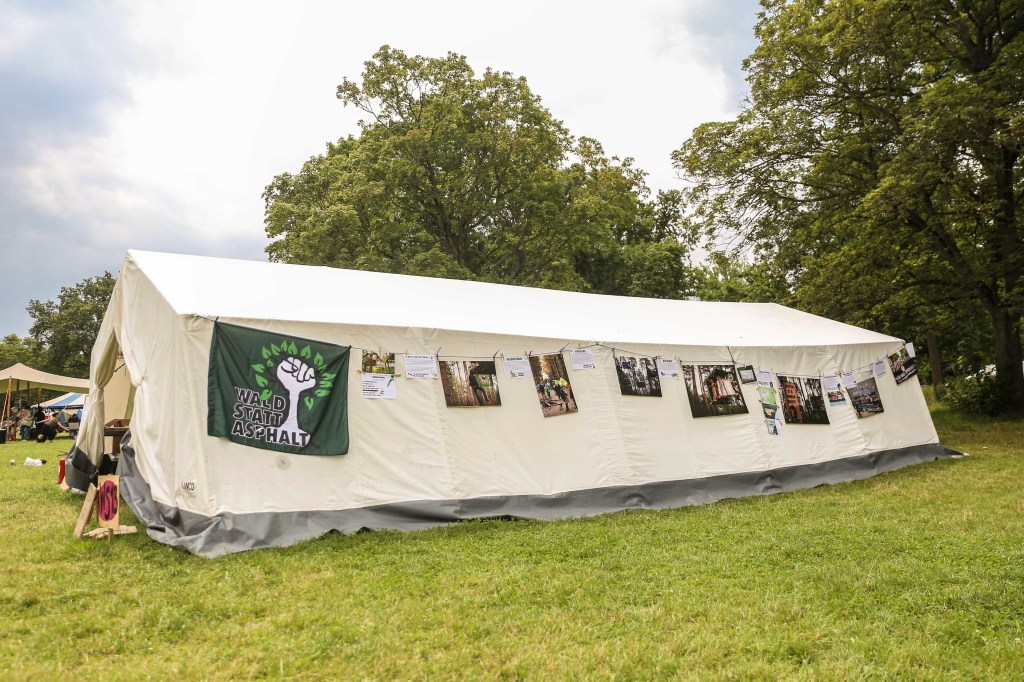
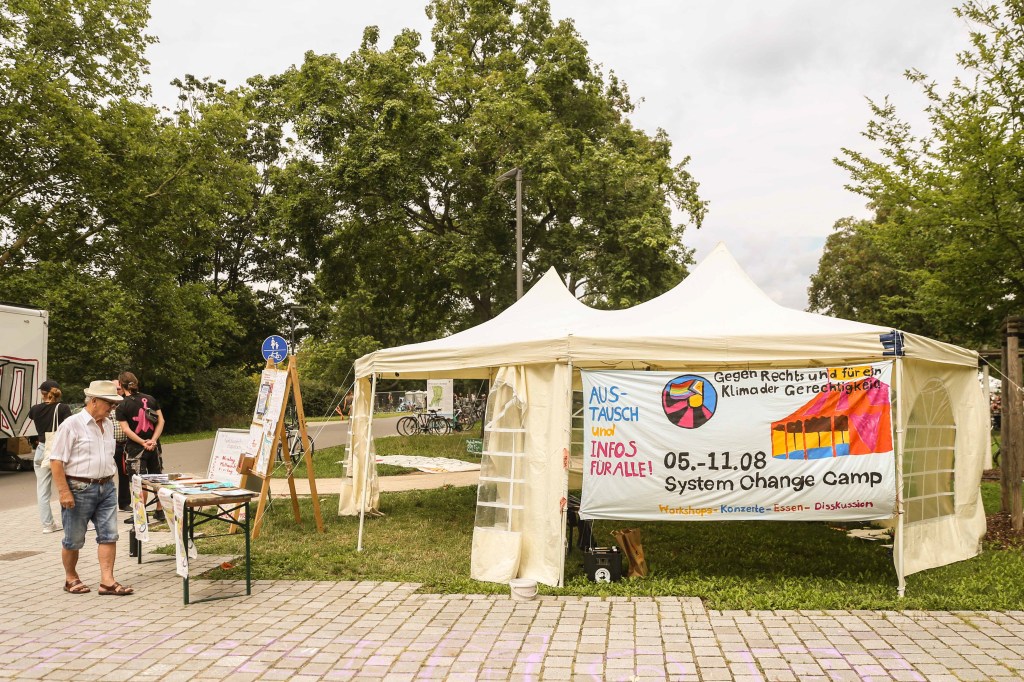
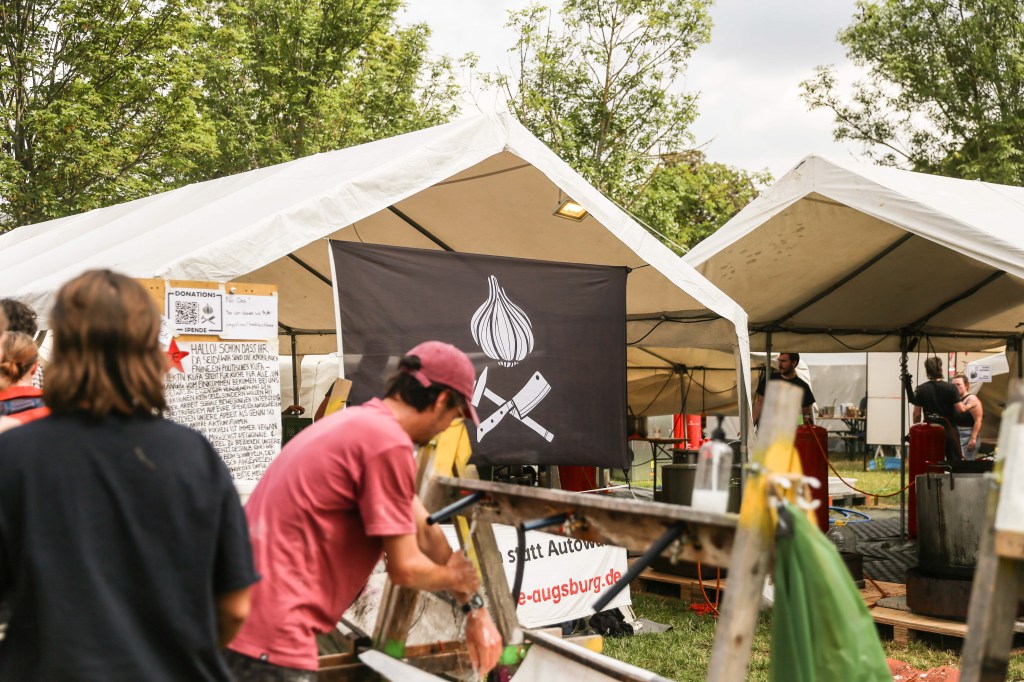
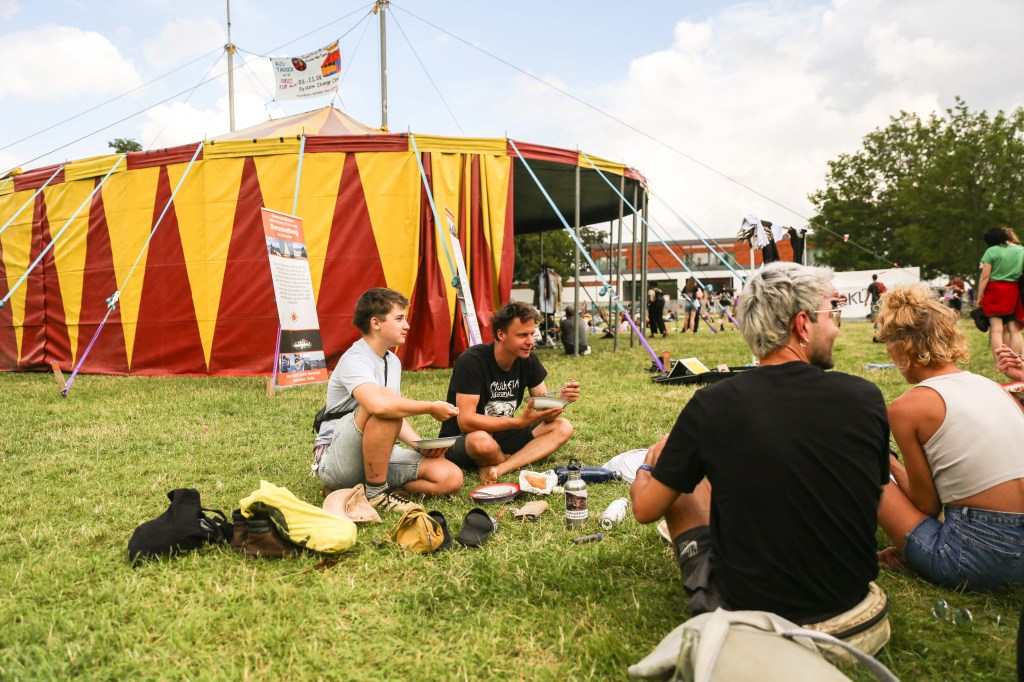
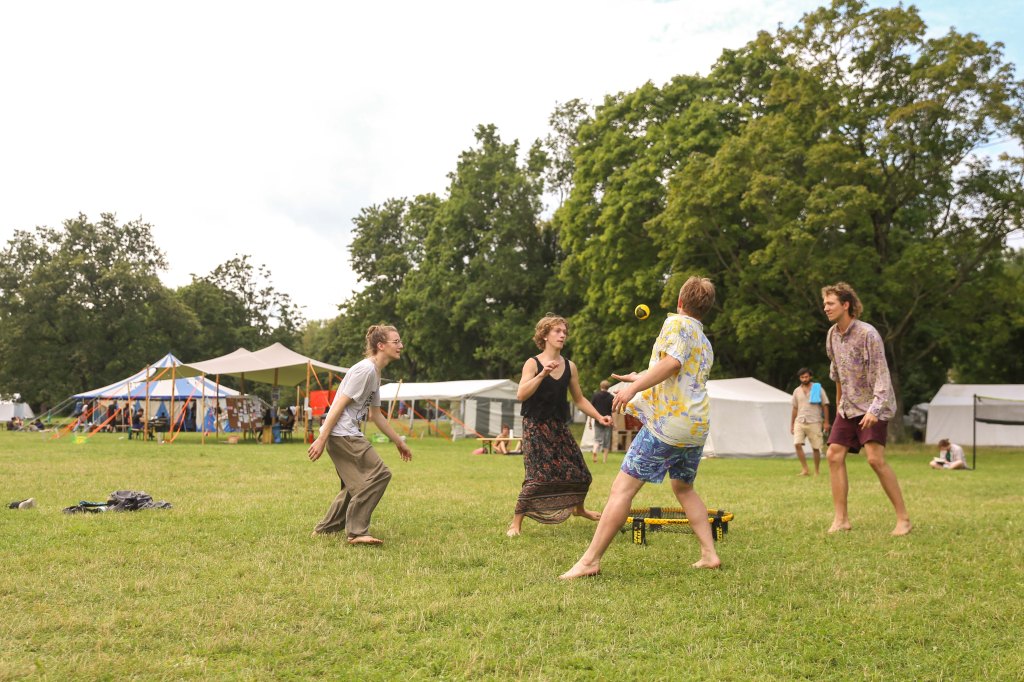
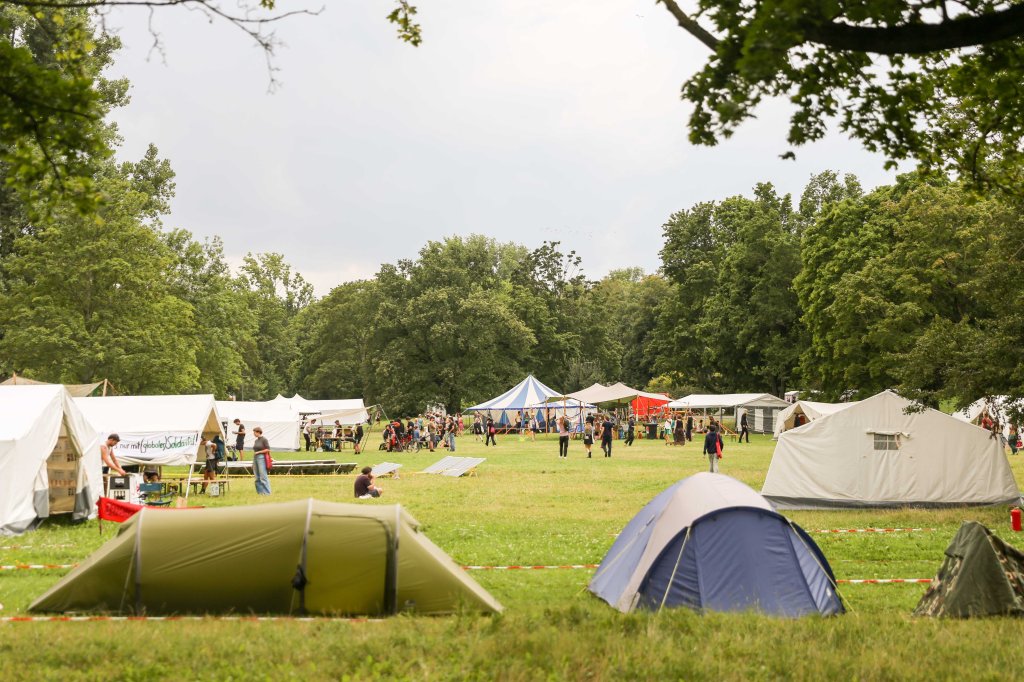
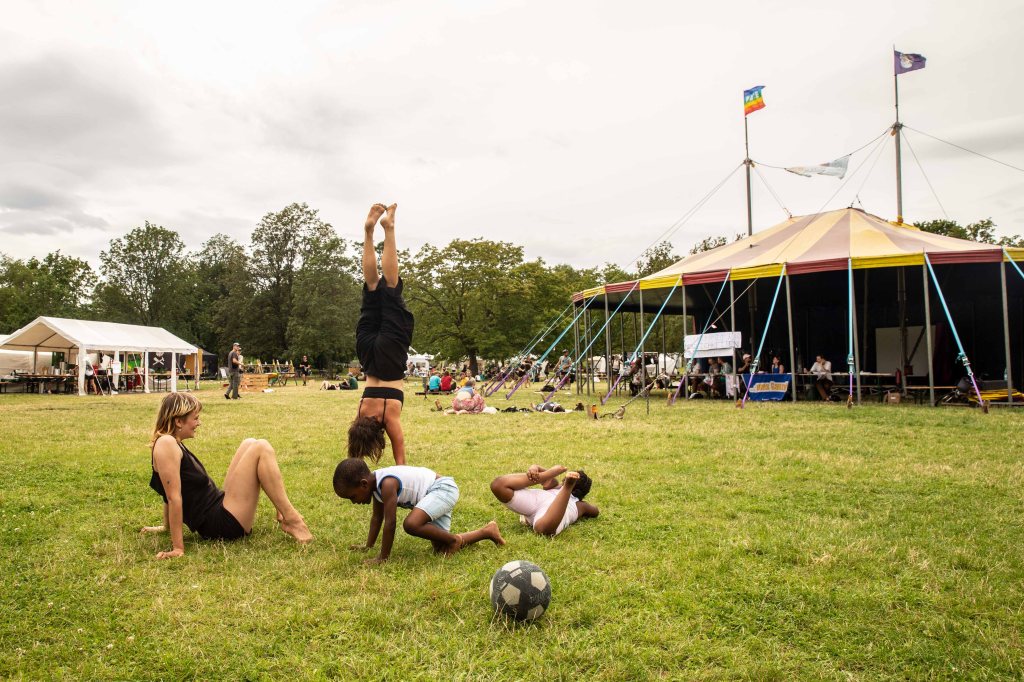
« Contre la droite et pour un climat de justice » : accroché au chapiteau d’accueil, un panneau peint à la main annonce la couleur du System Change Camp (Camp du changement de système), organisé à Erfurt, en Allemagne de l’Est. Pendant une semaine, du 5 au 11 août, pas moins de 1 400 activistes d’extrême gauche ont planté leurs tentes dans un parc public de cette ville, connue comme un bastion de l’extrême droite. Conférences, ateliers, films, concerts : malgré la tranquillité joyeuse qui règne sur le camp, une certaine urgence se fait sentir.
C’est que l’Alternative für Deutschland (Alternative pour l’Allemagne, AfD), parti d‘extrême droite, pourrait remporter les élections dans trois états fédéraux de l’Allemagne de l’Est en septembre. « La montée de l’extrême droite est clairement le problème de l’année, c’était donc évident que nous devions installer le camp chez nos alliés à l’Est, afin de leur prêter main forte », explique Anouk [*], l’une des porte-parole du System Change Camp.
Avec déjà 10 % des sièges au parlement fédéral et presque 16 % des sièges allemands au Parlement européen, l’AfD est maintenant en passe d’arriver au pouvoir dans au moins un État fédéral (Bundesland), même si la plupart des autres partis continuent de refuser de faire coalition. « Ils n’ont même pas besoin de faire campagne, car même les partis du gouvernement [verts, socialistes et libéraux] sortent une énormité raciste après l’autre, l’AfD n’a plus qu’à se laisser porter », critique Anouk.
Pour elle, comme pour des activistes présents au camp, une seule évidence : une éventuelle arrivée au pouvoir de l’AfD serait catastrophique pour le climat — et pour le mouvement écologiste. « Toute politique climatique deviendrait impossible et la répression serait terrible », soupire-t-elle. D’où l’idée de rassembler antifascisme et écologie dans un camp climat dédié : une première en Allemagne. « Nous offrons des espaces d’échange et de rencontres pour des milieux qui ne se croisent pas toujours, afin qu’ils puissent faire fructifier un terreau de luttes », espère-t-elle. L’équipe organisatrice du System Change Camp est issue du mouvement écologiste radical, connu pour ses zones à défendre (zad) et ses occupations de mines de charbon.

Paysans antifascistes
C’est un programme ambitieux qui attendait les participants : plus de 300 ateliers et conférences, dont parfois jusqu’à 20 simultanément, sur des thèmes allant de l’antifascisme en Allemagne de l’Est à la crise au Congo, du sauvetage des réfugiés en mer à l’activisme dans les campagnes allemandes. « Il est élaboré avec les groupes activistes locaux, pour leur donner de la visibilité, mais aussi de manière flexible par les participants, qui peuvent s’impliquer au jour le jour dans la vie du camp », explique Anouk.
Une initiative saluée par les deux syndicats paysans allemands, qui ont organisé plusieurs conférences et ateliers autour de la souveraineté alimentaire et de la terre. « Auparavant, on pouvait se sentir un peu mis de côté par le mouvement climat. Là, on sent que nos efforts portent enfin leurs fruits et que notre lutte est visibilisée », se réjouit Julia [*], récoltante de légumes à Kassel et militante de la Arbeitsgemeinde für örtliche Landwirtschaft (Communauté de travail pour l’agriculture locale, ABL), l’équivalent local de la Confédération paysanne. Même son de cloche du côté de la section agricole de la Freie Arbeiter*innen-Union (Syndicat libre des travailleurs, FAU), l’équivalent outre-Rhin de la Confédération nationale du travail.
« Dans l’ensemble, la gauche radicale en Allemagne est très urbaine. Nous participons à ce genre de rencontres afin de construire des ponts avec les campagnes et les travailleurs agricoles », explique Wolf [*], agriculteur près de Leipzig et militant FAU.

Lors des grandes mobilisations des agriculteurs qui ont secoué l’Europe, ils ont dû se battre pour que le mouvement ne tombe pas à la main de l’extrême droite. « Nous paysans, surtout en Allemagne de l’Est, sommes obligés d’être antifascistes. L’extrême droite a voulu noyauter les manifestations pour en faire une sorte d’insurrection généralisée selon les vieilles théories national-socialistes, explique Wolf. On a réussi à l’éviter en dénonçant l’influence de l’extrême droite sur le mouvement auprès des grandes organisations agricoles, qui commençaient à perdre le contrôle et ont rappelé leurs troupes. »
Attaques néonazies contre les écolos
Outre les organisations paysannes, les militants antifas d’Allemagne de l’Est étaient à l’honneur lors de nombreux ateliers et conférences, et présents en nombre. « J’ai l’impression que c’est la première fois que les gens ont vraiment à l’esprit que les deux [écologie et antifascisme] doivent être pensés ensemble », se réjouit Louisa, activiste antifa vivant à Berlin mais originaire d’un village rural de l’Est.
Comme de nombreux jeunes activistes de son âge, elle s’est politisée lors des manifestations hebdomadaires de Fridays for Future. « Comme un groupe de néonazis venait nous embêter à chaque action, et que l’environnement n’était pas trop la priorité des gens du village, on s’est vite tournés vers l’antifascisme », explique-t-elle.
« C’est vraiment difficile de faire de l’écologie ici, on est obligés d’être antifas »
Louisa raconte un contexte rural dominé par l’extrême droite néonazie, tolérée par les partis politiques. « Lors d’une commémoration aux morts des guerres mondiales, des néonazis sont venus déposer une gerbe et un drapeau nazi, avec une croix gammée censurée, sur le mémorial, sous la protection de la police. L’activiste antifa qui l’a enlevé a été poursuivi en justice !, s’indigne-t-elle. C’est vraiment difficile de faire de l’écologie ici, on est obligés d’être antifas. » Plusieurs zad de l’Est ont fait régulièrement l’objet d’attaques néonazies violentes, et certaines ont dû abandonner.

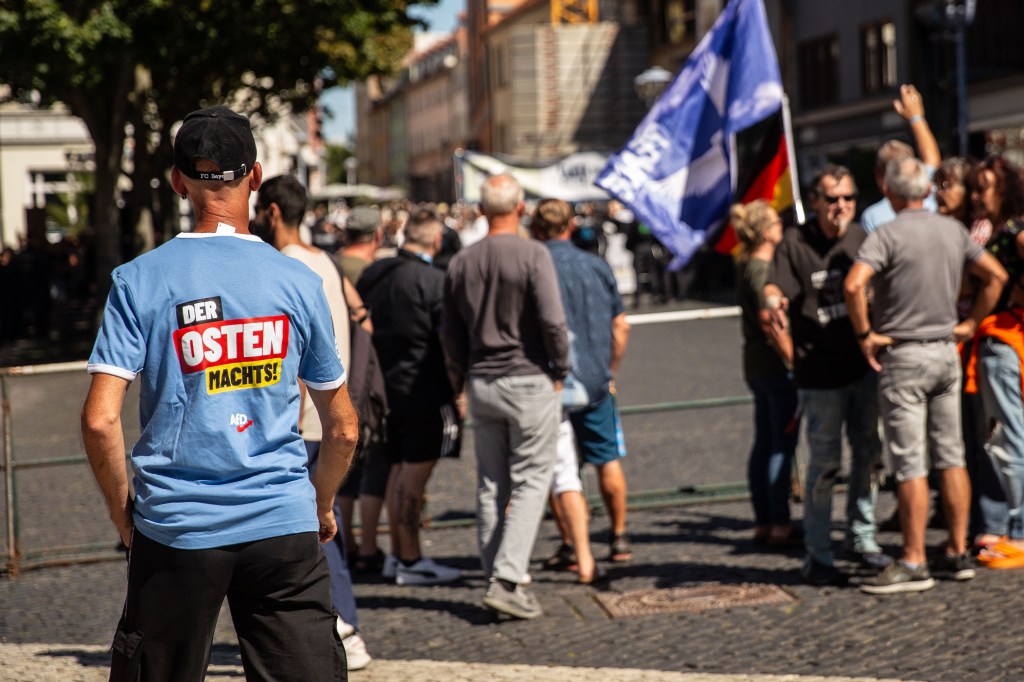
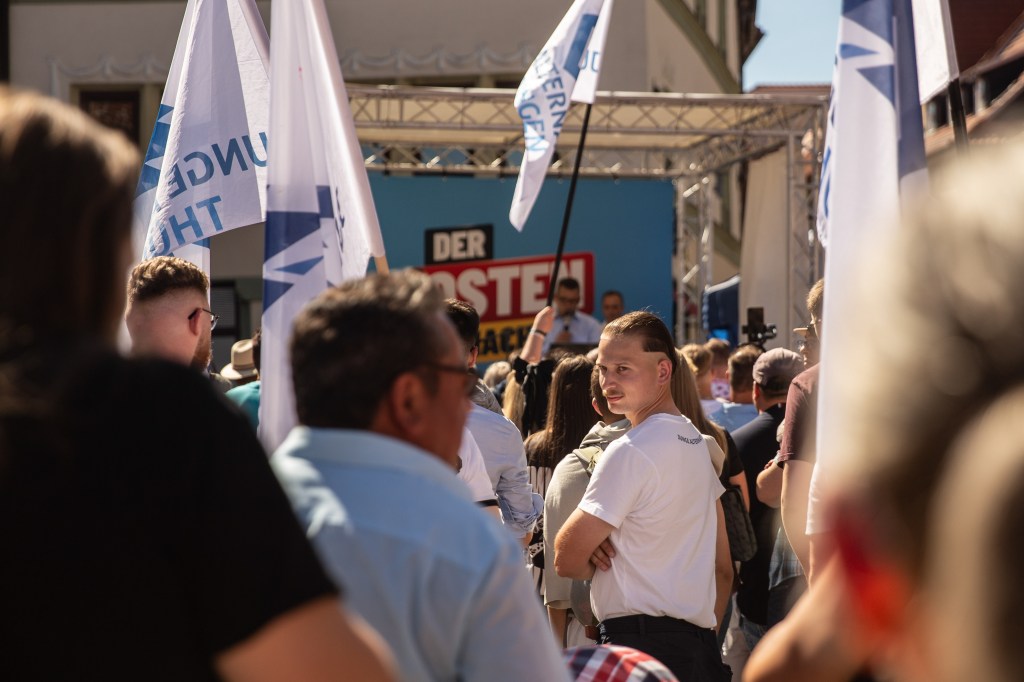
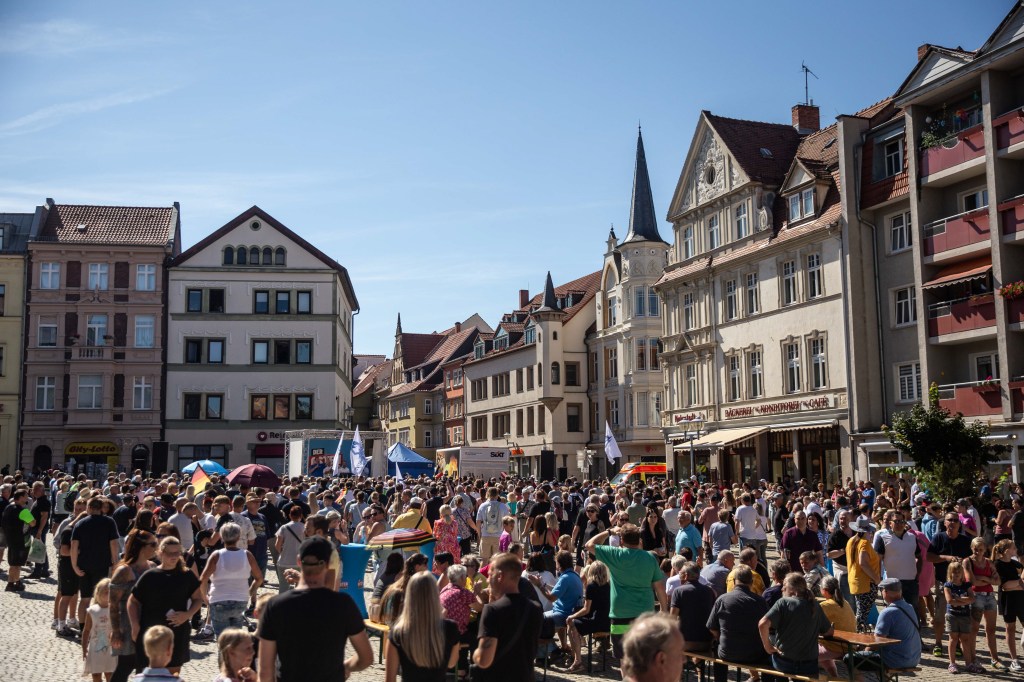
Dans ce contexte difficile, des écologistes radicaux sont amenés à faire du porte-à-porte pour des candidats politiques qui peuvent retirer des voix à l’AfD, et des antifas assurent parfois la sécurité des zad allemandes. Comme ici, à Erfurt, où le camp avait mis en place un dispositif de sécurité autogéré important. Un groupe de jeunes de l’AfD a essayé de faire monter des tensions ; il y aurait eu des insultes, des saluts nazis, des chants nationalistes aux abords du camp. Mais rien de pire. « On a eu de la chance que les néonazis avaient mieux à faire ailleurs, apparemment », dit Anouk avec soulagement.

Manifestations et conflits
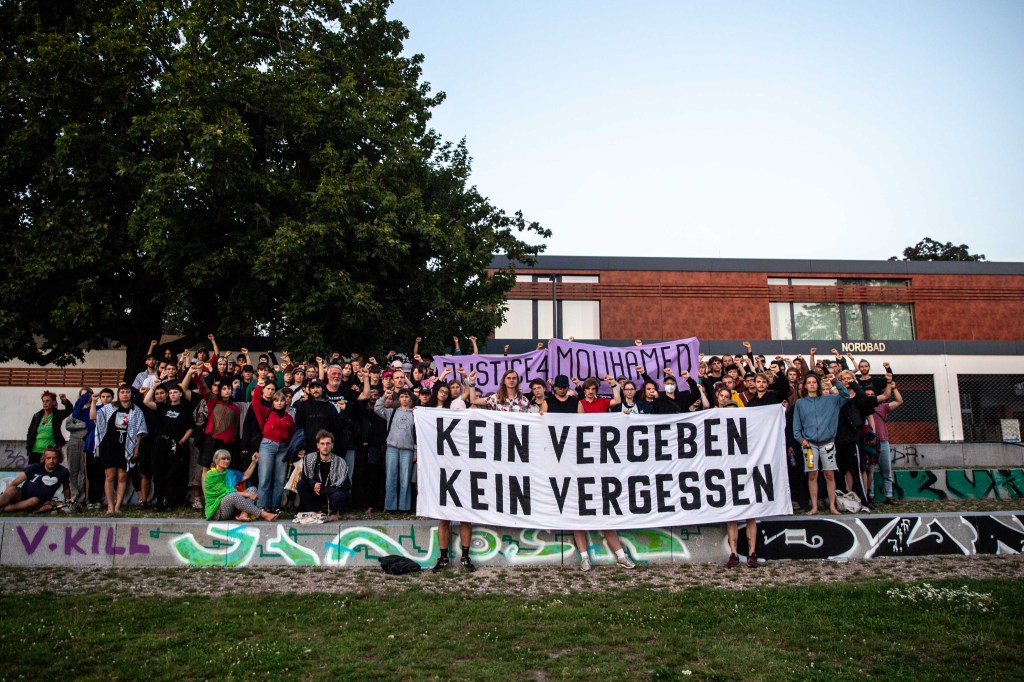
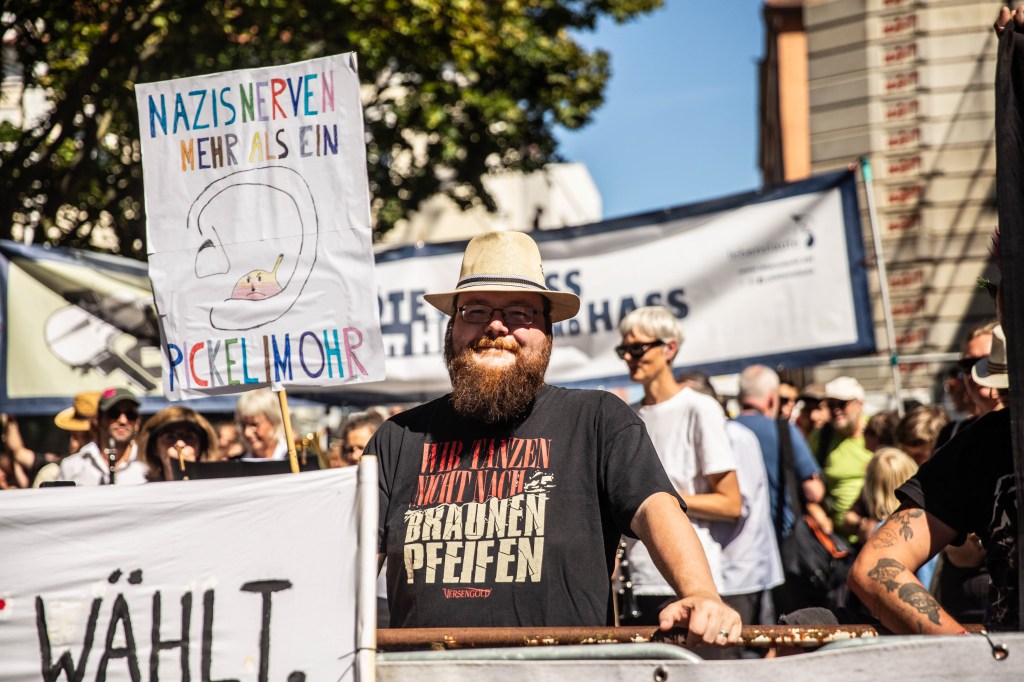
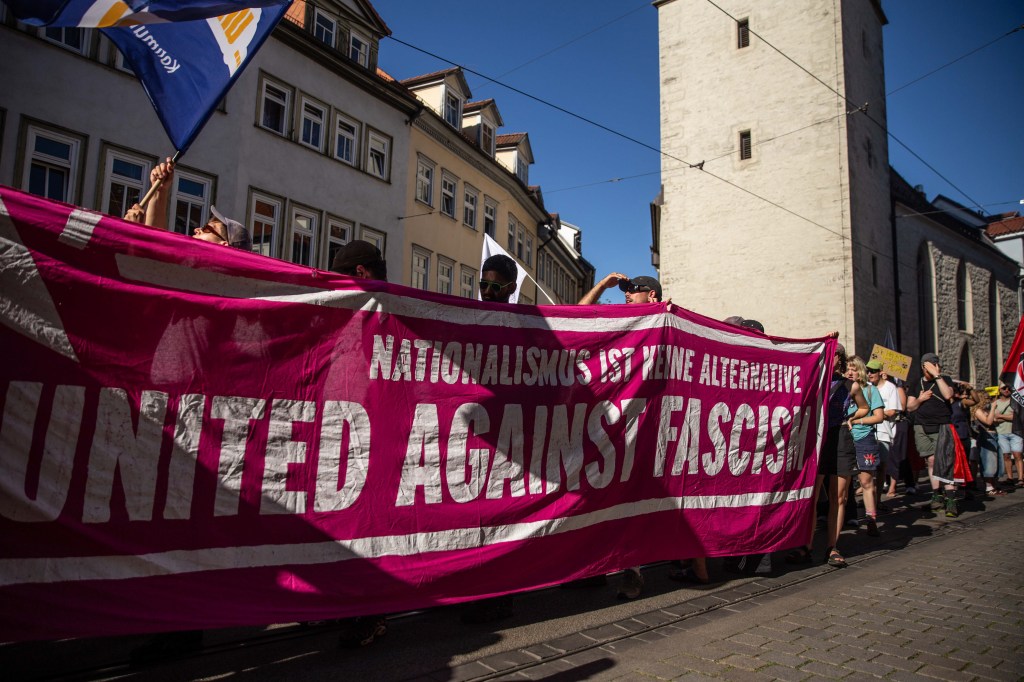
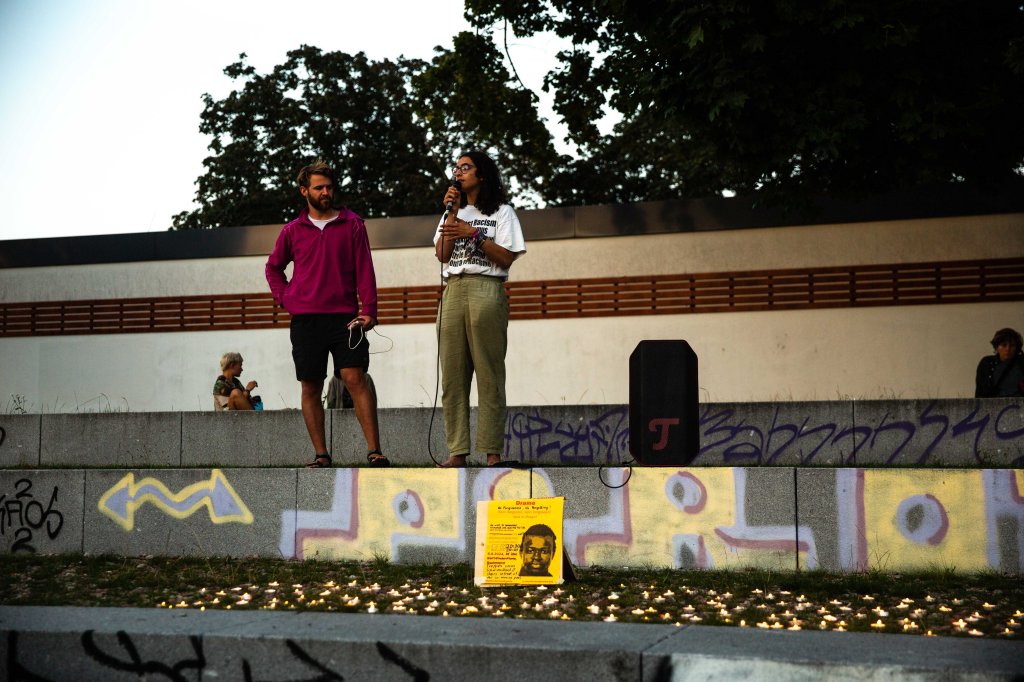
La tendance s’est même renversée : les activistes du camp ont participé à des actions de blocage contre des événements de l’AfD dans des villes aux alentours, notamment contre un discours du président régional du parti et néonazi connu, Björn Höcke, à Gotha. Une grande manifestation antiraciste et antifasciste a même défilé dans Erfurt le samedi 10 août, avant-dernier jour du camp. Musique et discours à fond, slogans engagés — « Le nationalisme n’est pas une alternative » —, la manifestation se voulait festive.
Mais le cortège de plusieurs centaines de personnes a dû s’arrêter à mi-parcours : des militants antifas avec une banderole contre l’antisémitisme, aux couleurs du drapeau israélien, bloquaient la route du bloc palestinien. Au terme de négociations tendues avec les organisateurs, les activistes propalestiniens ont quitté la manifestation, dégoûtés, pendant que le reste du cortège poursuivait sa route.

Cette déconvenue n’était qu’un moment parmi une longue liste de tensions au sein de la gauche allemande sur le camp. C’est que les « antideutsche » (anti-allemands), des militants antifascistes luttant principalement contre l’antisémitisme — et très critiques du mouvement propalestinien — sont majoritaires en Allemagne de l’Est. « Je savais qu’il existait des différences au sujet du conflit israélo-palestinien, mais je ne pensais pas que ça irait jusque-là, c’est absurde », s’étrangle un activiste français présent dans le camp.
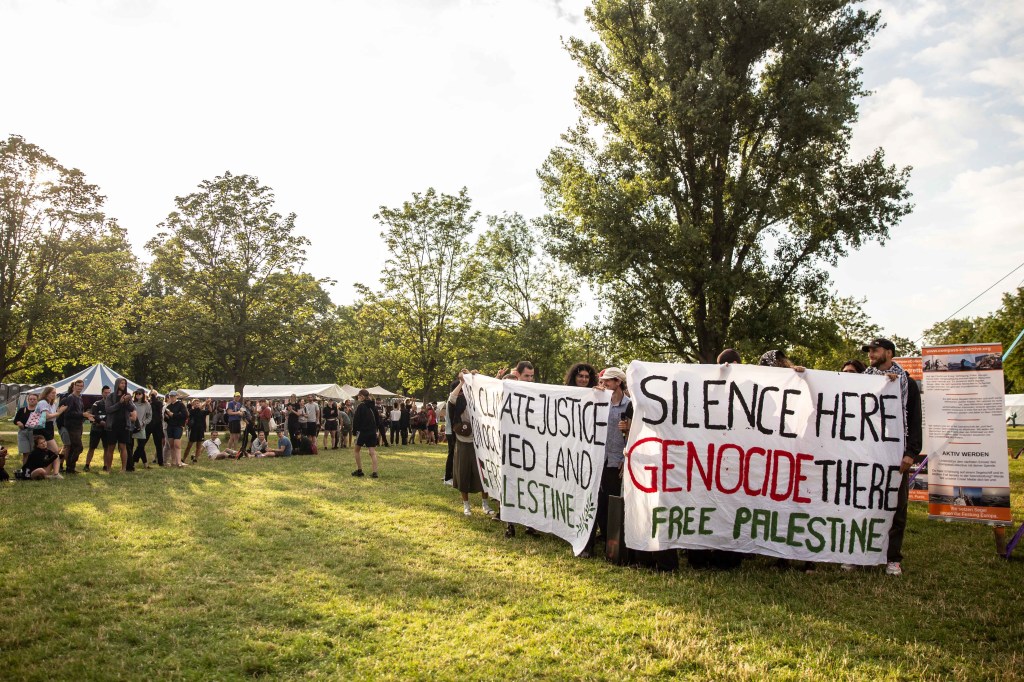
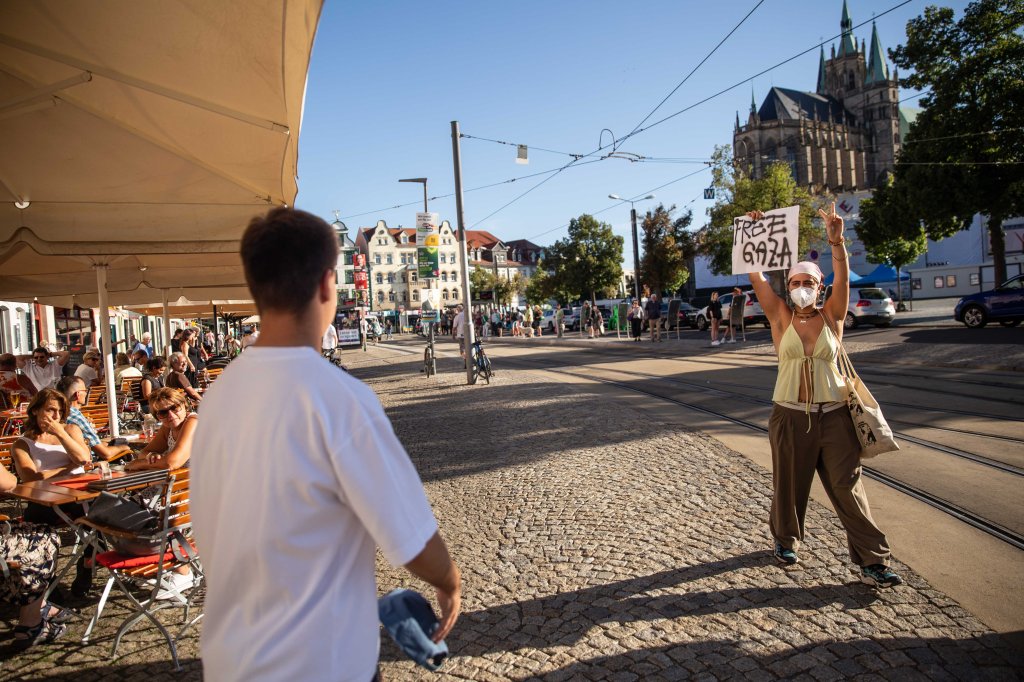
Face à un programme avec relativement peu de conférences sur Gaza ou la Palestine, un groupe d’activistes internationaux et allemands a manifesté spontanément dans le camp et mis en place une tente de solidarité palestinienne avec un programme alternatif. En face, les keffiehs et drapeaux palestiniens ont été bannis à des concerts organisés par des groupes « antideutsche » en marge du camp. « Chez nous, c’est inconcevable d’être d’extrême gauche sans être propalestinien, mais ici, c’est très tendu et ça ne me donne pas envie de revenir en Allemagne », ajoute-t-il. Lors des conférences des deux bords, des échanges parfois houleux ont eu lieu, sans toutefois déborder.
« On a reproché aux organisateurs d’être trop ci, pas assez ça, mais nous sommes là pour mettre en place une infrastructure fonctionnelle, pas pour établir un programme politique », se défend Anouk, la porte-parole. Entre la menace de l’extrême droite et les dissensions internes, la gauche allemande avait besoin de se retrouver pour réfléchir ensemble. Pari réussi ? Les prochaines élections le diront peut-être.
Voir le reportage photo en intégralité:


















English translation:
Against the far right, ecologists and anti-fascists unite in Germany
With the far right threatening to win several German regional elections, 1,400 activists gathered at a climate camp in Erfurt to make the link between anti-fascism and ecology.
Erfurt (Germany), report
“Against the right and for a climate of justice”: hanging from the welcome tent, a hand-painted sign announces the tone of the System Change Camp, organized in Erfurt, East Germany. For one week, from August 5 to 11, no fewer than 1,400 far-left activists pitched their tents in a public park in this city, known as a bastion of the far right. Conferences, workshops, films, concerts: despite the cheerful tranquility that reigned over the camp, a certain urgency pervaded.
The reason is the possibility of the far-right Alternative für Deutschland (Alternative for Germany, AfD) party winning elections in three East German federal states in September. “The rise of the far right is clearly the issue of the year, so it was obvious that we had to set up the camp with our allies in the East, to lend them a hand,” explains Anouk [*], one of the System Change Camp spokespeople.
With already 10% of seats in the federal parliament and almost 16% of German seats in the European Parliament, the AfD is now poised to come to power in at least one federal state (Bundesland), even if most other parties continue to refuse to form a coalition. “They don’t even need to campaign, because even the government parties [Greens, Socialists and Liberals] come out with one racist énormity after another, so the AfD just has to roll with it,” criticizes Anouk.
For her, as for other activists present at the camp, one thing is clear: if the AfD were to come to power, it would be catastrophic for the climate – and for the environmental movement. “Any climate policy would become impossible, and the repression would be terrible”, she sighs. Hence the idea of bringing anti-fascism and ecology together in a dedicated climate camp: a first in Germany. “We’re offering spaces for exchange and encounters for circles that don’t always cross paths, so that they can nurture a breeding ground for struggles,” she hopes. The System Change Camp team comes from the radical environmental movement, known for its Zones à Défense (ZADs) and coal mine occupations.
Anti-fascist farmers
An ambitious program awaited the participants: over 300 workshops and conferences, sometimes as many as 20 simultaneously, on themes ranging from anti-fascism in East Germany to the crisis in the Congo, from rescuing refugees at sea to activism in the German countryside. “It’s developed with local activist groups, to give them visibility, but also flexibly by participants, who can get involved on a day-to-day basis in camp life,” explains Anouk.
An initiative welcomed by the two German farmers’ unions, who organized several conferences and workshops around food sovereignty and the land. “Previously, we might have felt a little sidelined by the climate movement. Now we feel that our efforts are finally bearing fruit and that our struggle is being given a higher profile”, rejoices Julia [], a vegetable harvester in Kassel and activist with the Arbeitsgemeinde für örtliche Landwirtschaft (Working Community for Local Agriculture, ABL), the local equivalent of the Confédération paysanne. The agricultural section of the Freie Arbeiterinnen-Union (Free Workers’ Union, FAU), Germany’s equivalent of the Confédération Nationale du Travail (National Confederation of Labor), was similarly upbeat.
“On the whole, the radical left in Germany is very urban. We’re taking part in meetings like this to build bridges with the countryside and farm workers,” explains Wolf [*], a farmer near Leipzig and FAU activist.
During the great farmers’ mobilizations that shook Europe, they had to fight to prevent the movement falling into the hands of the far right. “We farmers, especially in East Germany, are obliged to be anti-fascist. The far right wanted to infiltrate the demonstrations and turn them into a kind of general insurrection based on the old National Socialist theories,” explains Wolf. We managed to avoid this by denouncing the far-right’s influence on the movement to the big farmers’ organizations, which were beginning to lose control and recalled their troops.”
Neo-Nazi attacks on environmentalists
In addition to farmers’ organizations, East German antifa activists were in the spotlight at numerous workshops and conferences, and present in large numbers. “I have the impression that this is the first time that people have really realized that the two [ecology and antifascism] need to be thought of together,” enthuses Louisa, an antifa activist living in Berlin but originally from a rural village in Eastern Germany.
Like many young activists her age, she became politicized during the weekly Fridays for Future demonstrations. “As a group of neo-Nazis came to bother us at every action, and the environment wasn’t too much of a priority for people in the village, we quickly turned to anti-fascism,” she explains.
“It’s really difficult to do ecology here, we’re obliged to be antifascists”.
Louisa recounts a rural context dominated by the neo-Nazi far right, tolerated by the political parties. “During a commemoration to the dead of the world wars, neo-Nazis came to lay a wreath and a Nazi flag, with a censored swastika, on the memorial, under police protection. The antifa activist who removed it was prosecuted,” she says indignantly. It’s really hard to do ecology here, we’re forced to be antifas.” Several zads in the east of France have regularly been the target of violent neo-Nazi attacks, and some have had to give up.
In this difficult context, radical ecologists are canvassing for political candidates who can draw votes away from the AfD, and antifas sometimes provide security for German zads. As here, in Erfurt, where the camp had set up a large-scale self-managed security operation. A group of AfD youths tried to raise tensions; there were reportedly insults, Nazi salutes and nationalist chants on the outskirts of the camp. But nothing worse. “We were lucky that the neo-Nazis had better things to do elsewhere, apparently,” says Anouk with relief.
Demonstrations and conflicts
The trend was even reversed: camp activists took part in actions against AfD events in nearby towns, including a speech by the party’s regional chairman and well-known neo-Nazi, Björn Höcke, in Gotha. A large anti-racist and anti-fascist demonstration even marched through Erfurt on Saturday August 10, the penultimate day of the camp. With its loud music and speeches, and militant slogans such as “Nationalism is not an alternative”, the demonstration was intended to be festive.
But the procession of several hundred people had to stop midway: antifa militants with a banner against anti-Semitism, in the colors of the Israeli flag, blocked the road to the Palestinian block. After tense negotiations with the organizers, the pro-Palestinian activists left the demonstration in disgust, while the rest of the procession continued on its way.
This setback was just one moment in a long list of tensions within the German left on the camp. In East Germany, the “antideutsche” (anti-German), anti-fascist activists who fight mainly against anti-Semitism – and who are highly critical of the pro-Palestinian movement – are in the majority. “I knew there were differences about the Israeli-Palestinian conflict, but I didn’t think it would go this far – it’s absurd,” exclaims a French activist in the camp.
Faced with a program with relatively few lectures on Gaza or Palestine, a group of international and German activists spontaneously demonstrated in the camp and set up a Palestinian solidarity tent with an alternative program. On the other hand, keffiyehs and Palestinian flags were banned from concerts organized by “anti-Deutsche” groups on the outskirts of the camp. “At home, it’s inconceivable to be far left without being pro-Palestinian, but here, it’s very tense and doesn’t make me want to come back to Germany,” he adds. At conferences on both sides, there were sometimes heated exchanges, but they never got out of hand.
“ The organizers have been criticized for being too this, not that, but we’re here to set up a functional infrastructure, not to establish a political agenda,” says spokeswoman Anouk. Between the threat of the far right and internal dissension, the German left needed to get together to think things through. Was the gamble a success? Perhaps the next elections will tell.


